Reflect
Stewards, Not Heroes (The Environment)
You can't architect a forest; you can only plant it and protect the soil. On poisoned cultures, intentional stewardship, and the long game of building belonging.
You can't architect a forest; you can only plant it and protect the soil.
As we wrap up this series on the human architecture of work, we have to be honest: sometimes you're not starting from neutral ground. You're starting from broken trust.
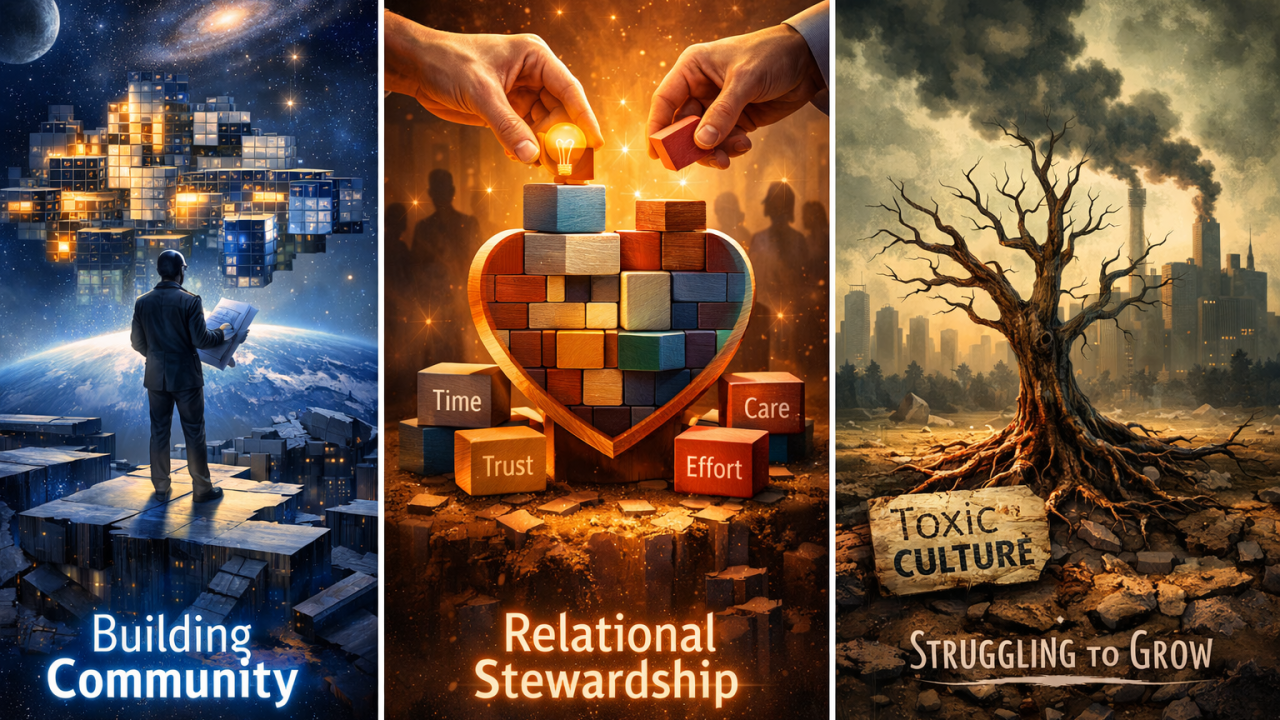
Community, like any living system, cannot thrive in poisoned soil. If the overarching culture is deeply unhealthy, you may not be called to fix it; you may be called to endure or move. Wisdom is knowing the difference.
Before you begin building, you have to count the cost. Real community is:
- Emotionally demanding
- Slow to form
- A multi-year commitment
Don't do this alone. One person burns out; two people create momentum.
We need Intentional Stewards. Not controllers who force alignment, and not heroes who burn out trying to save everyone. We need consistent, grounded presences — people who raise others up to propagate connection rather than dependency.
Stewardship often begins invisibly: protecting psychological safety in a meeting, refusing to reward corrosive behaviour even when it delivers results, or investing time in a relationship that doesn't immediately pay back. These choices rarely make slides, but they shape the system.
Stewardship isn't a title, it's a posture. Many of us are already doing this work quietly, without language for it. This series is simply an attempt to name it.
We don't drift into "home." We build it slowly, deliberately, and together. And if we're willing to pay the cost, we may find that in creating community, we become more human ourselves.
This aligns with what decades of research into psychological safety, social identity, and systems resilience have shown: performance follows trust, not the other way around.
This is a long-game strategy. Are you in a season where you have the capacity to be a steward for your community?